Are you tired of feeling like you’re competing with a rock concert just to get your students’ attention? Does the hum of classroom chatter often escalate into a roar that derails even the best-laid lesson plans? You’re not alone. Every teacher, from the first-year novice to the seasoned veteran, has faced the challenge of a noisy classroom. It’s a common struggle, but it doesn’t have to define your day.
This is a comprehensive guide for K-12 administrators and teachers, offering a range of proven techniques and insights to help you manage classroom noise, reclaim instructional time, and foster a more focused learning environment.
We will explore everything from non-verbal signals to positive reinforcement strategies, all with the goal of helping you create a classroom culture where a calm, productive atmosphere is the norm.
The Foundation: Building a Culture of Calm
Before implementing any specific technique, it’s crucial to establish a strong foundation of clear expectations. Your students can’t meet a standard they don’t understand.
Teach and Practice Voice Levels
Don’t assume students instinctively know what “inside voice” or “group talk” means. Create a clear system, often using a visual chart, that defines different voice levels:
- Level 0 (Silence): No talking. This is for independent work, listening to instructions, or quiet reflection.
- Level 1 (Whisper): For partner work or a quick question. Only the person you are talking to should hear you.
- Level 2 (Normal): For small group work or collaborative discussions.
- Level 3 (Presentation): For a speaker addressing the whole class.
Practice these levels with your students. Let them get loud for a moment, then use your signal to bring them back to a Level 0. This rehearsal builds muscle memory and shows them you are in control.
Establish Clear Routines and Procedures
Most classroom noise happens during transitions. Students are often unsure of what to do next. Mitigate this by creating predictable routines for everything:
- How to get a pencil.
- How to turn in work.
- How to get into groups.
- How to line up for lunch.
When these routines are practiced and reinforced, the chaos and subsequent noise of unstructured movement diminish significantly.
Quick & Effective Attention-Getters (Grades K-8)
These are the go-to techniques for when you need to quiet the room quickly. They are most effective when they are novel and practiced.
- Call-and-Response: This classic method is a fun and engaging way to get a class’s attention.
- Teacher: “Holy…” Students: “Macaroni!”
- Teacher: “1, 2, 3, eyes on…” Students: “Me!”
- Teacher: “Hocus Pocus…” Students: “Time to Focus!”
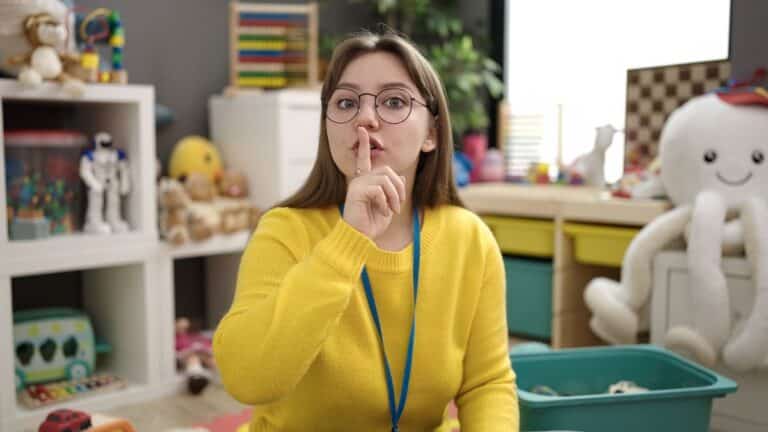
- Non-Verbal Cues: Using a visual or auditory signal that doesn’t require your voice.
- The “Silent Hand Raise”: As soon as you raise your hand, students know to raise theirs and stop talking until the entire class is silent.
- The “Rain Stick” or “Wind Chime”: A gentle, unique sound that signals a shift in focus.
- Light Signals: Flicking the lights on and off is a classic, though it should be used sparingly to maintain its effectiveness.
- The Power of Proximity: Sometimes, simply walking toward a chatty group or a distracted student is enough to quiet them down. Your physical presence can be a powerful, non-confrontational reminder to refocus.
Managing the High School Classroom
While some of the above strategies can be adapted, high school students respond well to methods that respect their growing maturity and focus on accountability.
- The Power of a Whisper: When the class is getting loud, try speaking in a low, quiet voice. Students will naturally lean in and hush their peers to hear what you are saying. This subtle shift in power dynamics places the responsibility for quieting down on them.
- The Countdown: A simple but effective technique. “I need all eyes on me in 5… 4… 3… 2… 1.” This gives students a clear, predictable timeline to wrap up their conversations and get back on task.
- Subliminal Signals: For older students, a simple phrase or “word of the week” can be used as a signal. For example, playing a specific piece of instrumental music or stating a particular word might signal that it’s time to transition to silent work.
Advanced Strategies for a Noisy Classroom
For persistent noise issues, or simply to add more tools to your toolkit, consider these practical, forward-thinking strategies.
- Tech-Based Solutions: Modern classrooms can leverage technology to manage noise.
- Volume Meter Apps: Websites and apps like Bouncy Balls or Too Noisy provide a visual meter that shows the class’s noise level. When the noise gets too high, the screen changes, providing a clear, non-verbal cue that the entire class can see and respond to. This makes managing noise a shared responsibility rather than a teacher-student conflict.
- Strategic Pausing: Silence can be your most powerful tool. If the class is getting loud while you are giving instructions, simply stop talking. Stand with a calm, patient demeanor and wait. Avoid the temptation to raise your voice. The silence will quickly become uncomfortable, and students will prompt their peers to quiet down so the lesson can continue.
- Channeling Energy with Movement: Sometimes, a noisy class isn’t about disrespect; it’s about pent-up energy. Incorporate short, movement-based brain breaks into your lesson. A quick stretching exercise, a standing break, or a minute of “free choice” talking can release energy and help students return to a more focused state.
The Final Word: Consistency and Self-Care
No matter which strategies you adopt, consistency is key. A new routine is only effective if it’s used every time. Moreover, remember that your own calm and composed demeanor is a powerful tool. When you model the peace and focus you wish to see in your classroom, your students will respond in kind. You’ve got this.
You’ve got important career goals — we have the graduate program to get you there. Check out our available graduate degree programs to advance your career today!