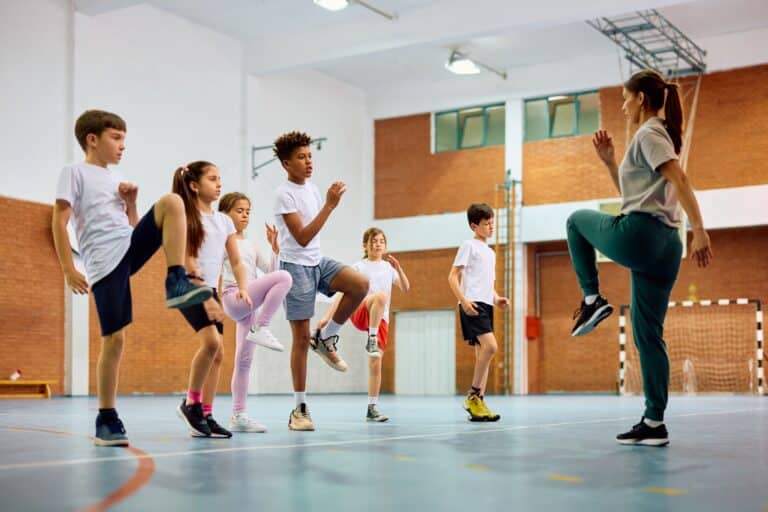
When most people think of PE, they picture students taking laps around the gym, a few games of dodgeball, or students trying to sneak their way out of participating. But physical education is so much more than just burning off energy or giving kids a break from academics. A truly effective PE class builds skills, confidence, connection, and lifelong habits that carry over well beyond the school years.
If you’re working to create a PE program that’s more than just “gym class,” here are the key pillars to focus on, with each one essential to making PE meaningful, memorable, and impactful for every student who walks through your doors.
Effective PE Class Essentials
Help Students Enjoy Being Active
Most PE teachers’ goal is to help students foster a love for being active. It isn’t about pushing kids to run an eight-minute mile; it’s about helping them find the kinds of movement that make them feel good and that they want to continue doing.
For some students, this might mean being part of a sports team, while for others, taking a yoga or dance class, riding a bike, or going for a walk with friends. When kids have positive experiences with movement at school, they’re more likely to stay active outside of school and carry those habits into adulthood.
To help students find their love for movement, consider rotating different units that expose them to a wide range of activities. Doing this helps to keep it fun and fresh and shows students there’s no one “right” way to move, there are a lot of different ways.
Create a Foundation for Lifelong Fitness
Beyond fun, a genuine PE class teaches students how to take care of their bodies. That means providing them with the tools, strategies, and knowledge they need to establish sustainable fitness habits that last.
For example, teaching proper form and safety for basic exercises. Incorporating lessons on goal setting, tracking progress, and how to structure a personal workout routine. Bringing in discussions on rest, recovery, hydration, and nutrition, especially as students get older and more independent.
Make sure they understand the “why” behind what they’re doing, too. When students learn how to listen to their bodies, stay consistent, and recognize progress in small steps, they’re much more likely to stick with it long after the PE class ends.
Promote Teamwork, Sportsmanship, and Social-Emotional Growth
PE is one of the best places in school for students to develop social-emotional skills, as long as we give them the space and support to do so. Every game, team challenge, and partner activity is an opportunity for students to practice communication, collaboration, and conflict resolution.
Don’t just assume students know how to play well together. Take the time to model and teach what good sportsmanship looks like, such as how to win gracefully, how to lose with dignity, and how to encourage others even when you’re on different teams.
Use class discussions and quick reflections to help students connect what they’re doing in the gym with real-world scenarios. When students have a moment of frustration during a game, use it as an opportunity to work on emotional regulation. That high-five after a tough win? That’s building community. These actions and discussions are just as important as physical fitness.
Support All Skill Levels and Abilities
It’s imperative to make sure that PE class is accessible to everyone, regardless of their skill level or ability. Make sure it’s a space where every student belongs. It’s not about who can run the fastest, kick the ball their furthest, or jump the highest. It’s about the effort students put in and the progress they make along the way.
To ensure participation from all students, make activities adaptable so each student can fully engage regardless of their skill level or ability. If you see a student struggling with a move, step in with a quick adjustment or a quieter check-in to help them feel supported rather than singled out. When students feel supported, they will be more likely to engage.
Teach More Than Just Movement
Go beyond fitness and teach health and wellness education. While it’s important to cover topics like heart health, staying active, and eating your fruits and veggies, it’s equally important to discuss topics about managing stress, getting enough sleep, and how movement can boost your mood. These don’t have to be formal lessons, just quick mini-lessons or chats that help students connect the dots.
For example, you can ask students questions like “Have you ever noticed how moving around helps you focus better?” or “What’s something active you like to do when you’re feeling stressed?” This can help students see that PE class isn’t just about playing games—it’s about learning how to take care of their bodies and minds in a way that actually fits into their real lives.
Build a Safe and Positive Environment
All of the above only works if students feel safe, respected, and encouraged to try. So much of what happens in PE involves risk, like trying something new, failing in front of others, and pushing physical limits. That can all feel scary, especially for students who already don’t feel confident in their bodies.
Try to set the tone early. Establish clear expectations around kindness, effort, and mutual respect. Shut down teasing or competitiveness that crosses the line. Give consistent praise, recognize effort over ability, and make sure every student knows that you value who they are, not just how well they perform.
And most importantly, model it yourself. Your tone, energy, and attitude matter more than you think. When students see you show patience, empathy, and enthusiasm, they’re more likely to mirror those same traits with each other.
A solid PE program is about helping students develop the tools they need to live a long, healthy, active life. It’s not just about learning the rules of a sport or doing well on a fitness test—it’s about building confidence, understanding how their bodies work, and creating habits they’ll actually want to stick with.
You’ve got important career goals — we have the graduate program to get you there. Check check out our available graduate degree programs to advance your career today!