If you’re trying to get students to really think while they read, not just skim or restate facts, then reciprocal reading might be just the technique you’re looking for. It’s not flashy and doesn’t have any bells or whistles. But what it does is something that every teacher hopes for: it helps students take control of their own reading process.
Reciprocal reading is a structured yet flexible strategy where students work together to make sense of a text using four roles: summarizer, questioner, clarifier, and predictor. Each role targets a specific reading skill, and when students cycle through all four, they’re not just reading, they’re processing, discussing, and deepening their understanding.
It’s an old-school strategy that works because it’s rooted in solid thinking habits. Here we’ll explain how it works and why it’s worth educators using it in their classroom.
The Four Pillars of Reciprocal Reading
Reciprocal reading is built around four strategies that, when used together, turn passive reading into something way more interactive. These roles help break down the process and keep students engaged every step of the way. Let’s take a closer look at what each role does and why it matters.
Summarizing
Students start by condensing what they’ve read into a few key points. This isn’t a paragraph recap but more of a few big ideas that help to identify the heart of the passage. The summarizer’s job is to sift through the details and bring forward what’s truly important.
This step pushes students to distinguish between main ideas and supporting details, which is a skill many readers struggle with. When they know they’ll need to summarize aloud or share with a group, they read more attentively and more purposefully.
Questioning
The role of a questioner teaches students to stop accepting text at face value and start digging deeper. They generate questions that explore meaning, author intent, and connections to other texts or real-life situations.
And these aren’t just, “What color was his shirt?” type of questions; this is about asking things that make your brain work a little harder, such as, “Why did the character make that decision?” or “What message is the author trying to send here?” These kinds of questions open the door to meaningful discussion and help students engage with the text on a whole new level.
This step empowers students to become curious readers. They learn that it’s okay not to understand everything right away, and what truly matters is that they ask and seek out clarity. You’ll start to see students coming up with thoughtful, open-ended questions that fuel discussion, which helps everyone get more out of what they are reading.
Clarifying
The clarifier’s job is to identify tricky words, confusing phrases, or anything in the text that causes a little mental speed bump. Clarifiers highlight these areas and either break them down for the group or ask for help.
This step builds metacognition—the ability to recognize when you’re stuck and take steps to fix it. It also encourages students to slow down and not rush past difficult parts of a passage. And since clarifying often involves context clues, rereading, and word analysis, you’ll see vocabulary skills improve, too.
Predicting
Lastly, we have the predicting role. This role invites students to guess what might come next, based on what they already know from the text. It’s not about being right, it’s about using evidence and logic to support your thinking.
Prediction isn’t just for novels or narratives; it works beautifully with nonfiction, too. When students anticipate what an article might say next or how an argument will unfold, they engage with structure, tone, and purpose in a meaningful way.
Seeing the Strategy Come to Life
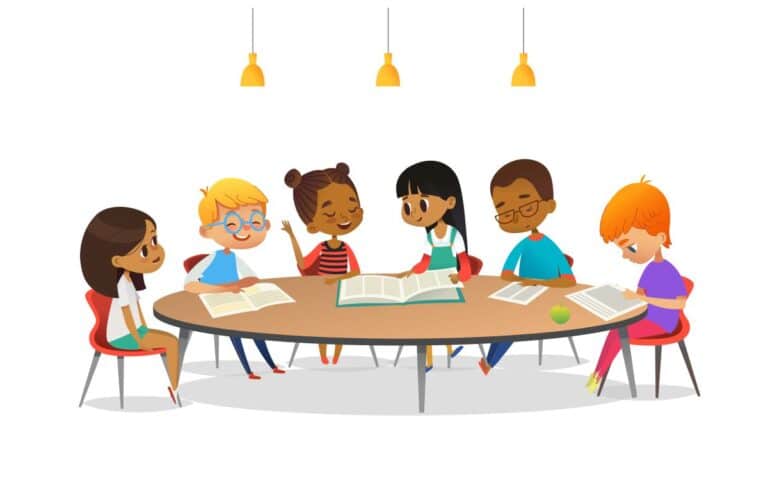
Individually, each of these strategies builds reading comprehension skills. But what happens when you put them all together? They create a powerful spark of real thinking, talking, and learning. Reciprocal reading is most effective in small groups or pairs, where students rotate roles and collaborate to analyze a shared text.
When done well, students may shift from passive readers to active thinkers. They may start talking more, helping each other clarify confusion, or build confidence in their ability to work through challenging material. Even your more reluctant readers may find it easier to participate because they have a clear, manageable role.
This method also levels the playing field. Instead of always having one or two voices dominating the conversation, each student has a specific job to do. There’s accountability and structure, but also space for creativity and interpretation. You can feel the energy change in the room when kids are truly engaged with the text and each other.
How to Apply This Strategy in the Classroom
What does this strategy look like in the classroom? It’s fairly simple. First, you choose a text. This can be anything from a nonfiction or a fiction book to an article.
Group students together and assign each student a role. Have students read a section silently or together, and then walk through each step: summarize, question, clarify, and predict.
Once you start using the technique regularly, and students get the hang of it, you may notice they start using the strategies without even thinking about it. They’ll begin summarizing naturally, asking better questions during class discussions, pausing to clarify confusing parts, and predicting what’s coming next, all on their own. That’s when you know it’s working.
You can also tweak the format depending on your goals. For example, if you want to focus on vocabulary development, then you should emphasize the clarifier role. If you are looking to build discussion skills, then double down on the questioner.
There’s room to adapt this strategy to fit your students, your content, and your classroom vibe. This strategy also works across grade levels. You might simplify it for younger students or raise the expectations for older readers, but the core idea stays the same: give students the tools to drive their own understanding.
Reciprocal reading is one of those strategies that quietly transforms your classroom. It also gives your students a voice, structure, and agency—and that’s what real comprehension is all about.
Educators never stop learning; check out our available graduate degree programs to hone your skills and promote lifelong learning and academic excellence.